Find the categories
Include chat, uploads, profile, device, payment, support and inferred information.
Map what enters an AI companion service, reduce unnecessary disclosure, choose the right account control and keep useful evidence—without pretending any app can guarantee privacy.
Educational information, not legal advice, security testing or a privacy certification.
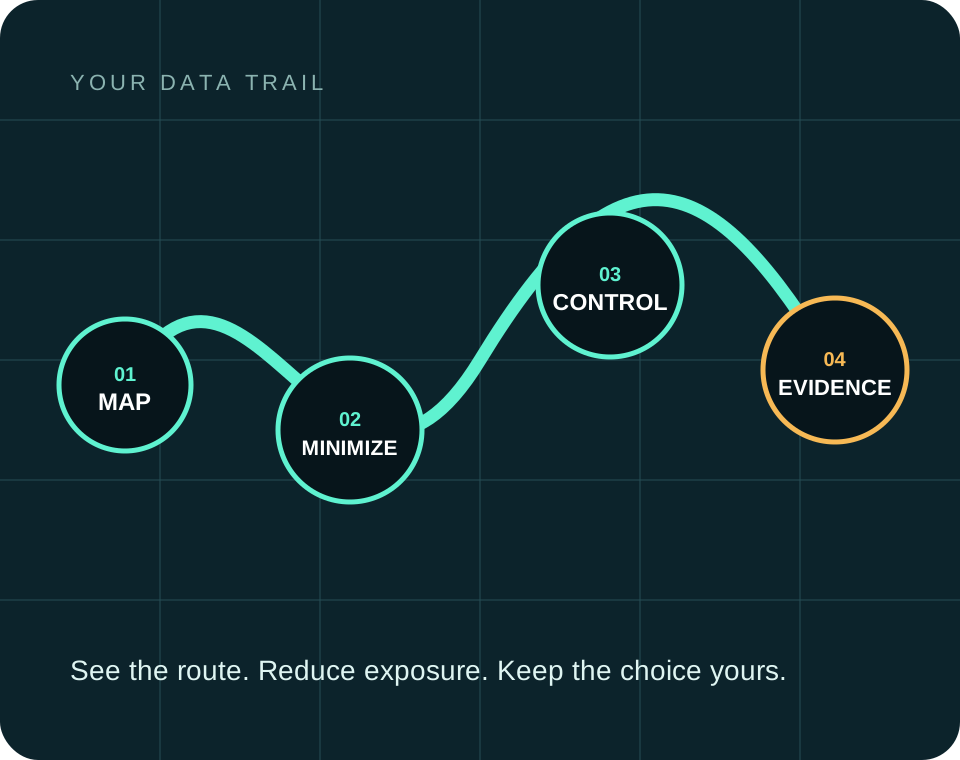
Use dated public sources, reduce what you share, save request details and ask the provider when a control’s scope is unclear.
Include chat, uploads, profile, device, payment, support and inferred information.
Remove names, exact places, credentials, documents and another person’s private details.
Access, correct, export, object, delete or close an account using the current route.
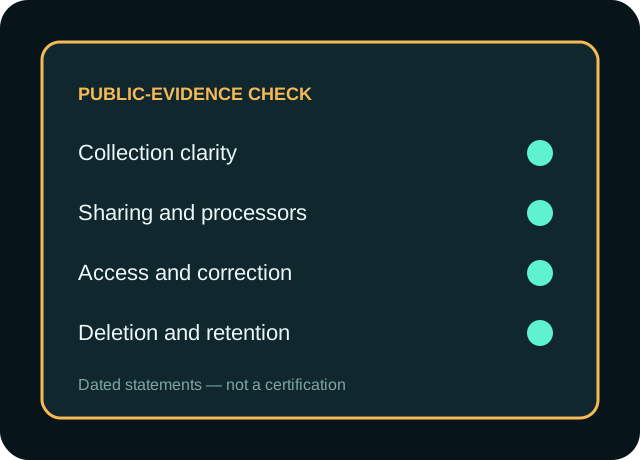
Save dates, confirmations and policy versions without reposting sensitive content.
Each page answers a separate data-control question, names its sources and marks the limits of what public evidence can prove.
Draw the route from the moment information enters a service to storage, use, sharing and deletion.
Open this check →Build a category list before deciding what belongs in a conversation.
Open this check →Read the current notice for storage, review, moderation and retention statements about conversation history.
Open this check →Identify what is shown as a profile field, what is saved as memory and what may be inferred from repeated conversations.
Open this check →Treat biometric-style media and intimate uploads as higher-exposure inputs.
Open this check →Look beyond conversations to the records created by payments, devices, sessions and support contacts.
Open this check →Turn a long recipient list into a practical map of who may receive which category of information.
Open this check →Reduce exposure before information becomes part of an account or conversation.
Open this check →Recognize high-consequence details before they leave your device.
Open this check →Protect people who did not choose to enter a companion conversation.
Open this check →Pause before uploading a real person’s face, voice or body.
Open this check →Enable only the device access needed for the feature you actually use.
Open this check →Find collection, purpose, sharing, retention, rights and contact details without relying on a trust badge.
Open this check →Match your goal to an in-app setting, support request or formal rights request.
Open this check →Distinguish removing one message, a conversation, a companion profile and the whole account.
Open this check →Write a scoped request that names the account and the personal data you want addressed.
Open this check →Ask what personal data is held, where it came from, why it is used and who receives it.
Open this check →Decide whether a data copy is useful before an irreversible account action.
Open this check →Separate an editable profile field from an inferred or remembered detail that needs a different route.
Open this check →Find what the current policy says about service improvement, model development and other uses beyond your immediate request.
Open this check →Locate opt-out and limit choices that may depend on your jurisdiction.
Open this check →Interpret retention language without promising immediate or complete erasure.
Open this check →Protect the account, preserve useful evidence and contact the right party.
Open this check →Compare services using dated public evidence instead of a vague “private” label.
Open this check →Apply the same public-evidence checklist to Candy AI without implying affiliation or hands-on account testing.
Open this check →These sources support the homepage method. Product-specific pages separately label provider statements and the date checked.
We review dated public product and policy material. We do not claim a private account test, certification, complete deletion or guaranteed confidentiality.
Read the independent case study